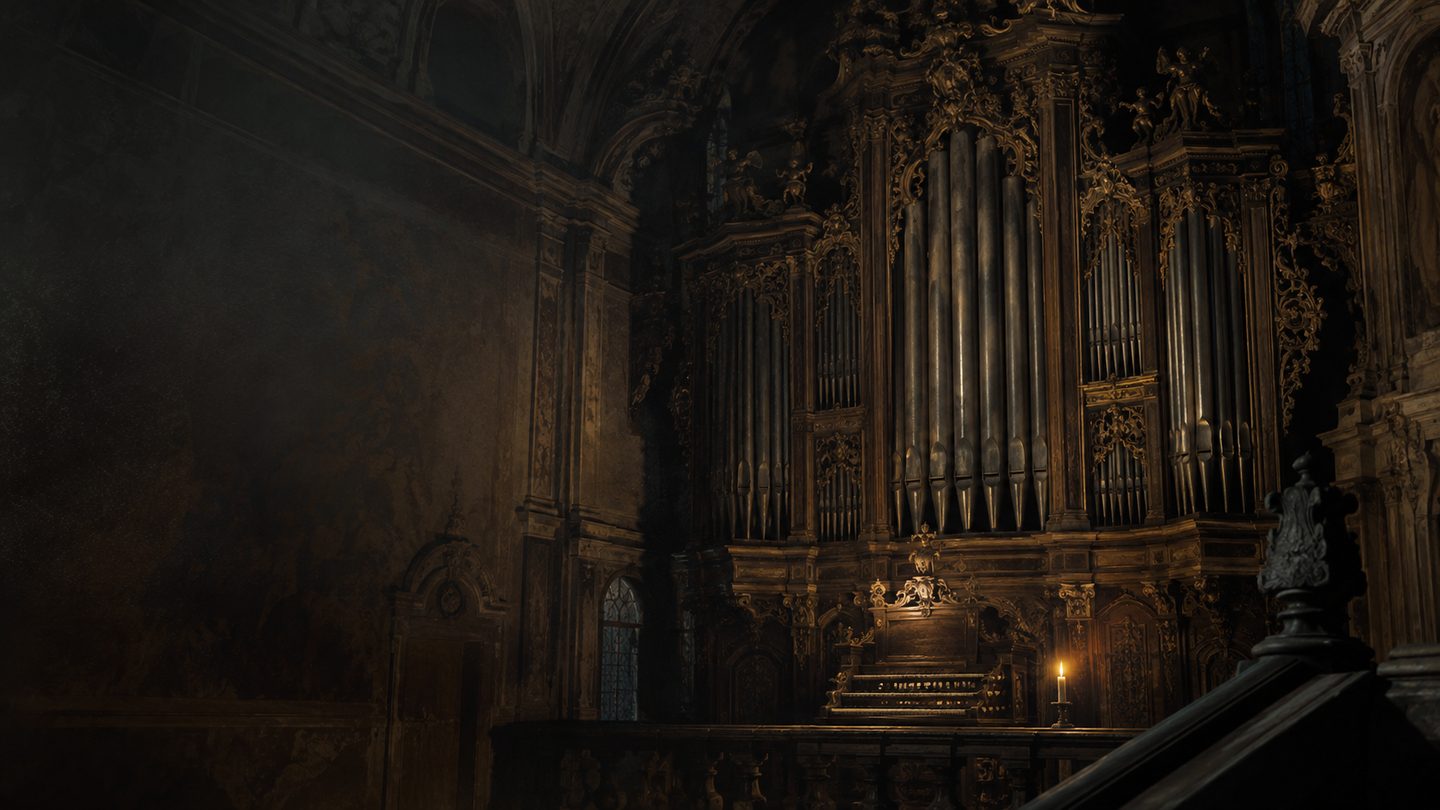
A treatise on organ building. An anatomist who portrays herself at work. Six organs built to answer one another. The fiction begins in a world that existed.
This tour adapts themes from the Author’s Note to Vox Humana. The historical images show real people, works and instruments. What each reference has to do with the novel is marked separately.
01 · THE TITLE
Vox humana is a real stop — and it reached Spain in the novel’s own year
The vox humana is nobody’s invention: it is one of the oldest stops on the organ, a reed of short, capped resonators, almost always at 8′, built to imitate a distant chorus of voices. It is documented from the late sixteenth century onwards, and it depends on a carefully adjusted tremulant — without one, the illusion falls apart.
The date that matters to this book: the stop appears in a Spanish inventory in 1762, at San Mateo in Tarifa, as “Voz Humana en Eco, 8′”. That is the year Tomás inherits the workshop.
The name is on the cover of the book, on the ivory knob the reader sees before reading a single line.
Dom François Bedos de Celles published L’Art du facteur d’orgues between 1766 and 1778. The treatise describes how an organ is built, in text and in plates: the work that stays hidden behind the instrument’s case.
In the novel: the Author’s Note makes clear that the epigraphs and passages attributed to Bedos were invented or freely adapted, with one marked exception: the reference in article 143 to the unison of the natural human voice. The real book documents no Almada secret.
A plate from Bedos’s treatise. Public domain, no changes. original image.
03 · MUSICAL HERITAGE
The six organs of Mafra came later
The Mafra set was conceived so that all six instruments could play together. It is that relationship between them, as much as the number, that makes the set so unusual.
In the novel: when Antão speaks of the organs of Mafra in 1745, he is not speaking of the present set. The Author’s Note distinguishes the instruments of João V’s time from the six that would be built later, by Machado e Cerveira and Peres Fontanes.
An organ at Mafra, 2006, photograph by Georges Jansoone. CC BY 2.5, no changes. original image.
04 · SCIENCE AND ART
A woman who taught anatomy in wax
Anna Morandi Manzolini (1714–1774) was an anatomist, sculptor and lecturer in Bologna. She made anatomical models in wax from her own study of the body. Her self-portrait preserves the image of a woman practising the craft.
In the novel: Morandi belongs to the historical lineage cited in the Author’s Note. Ceroplastics existed; what the house of Almada does with the material and the knowledge belongs to fiction.
Self-portrait of Anna Morandi Manzolini, photograph by Warburg. CC BY-SA 3.0, no changes. original image.
05 · ANATOMICAL CABINETS
Ruysch and Fragonard: the body as a collection
The Author’s Note brings together two real traditions: the anatomical preparations of Frederik Ruysch in Amsterdam, and the écorchés of Honoré Fragonard at Alfort. Preserving a body could be an object of study, of demonstration, and of admiration.
The boundary: none of these precedents proves the novel’s method. The crimes and the Almada workshop are invented. The Fragonard here is Honoré the anatomist, not Jean-Honoré the painter.
Frederik Ruysch, by Jurriaen Pool, 1694. Public domain, no changes. original image.
06 · SOUND AND STONE
There are clay vessels inside churches
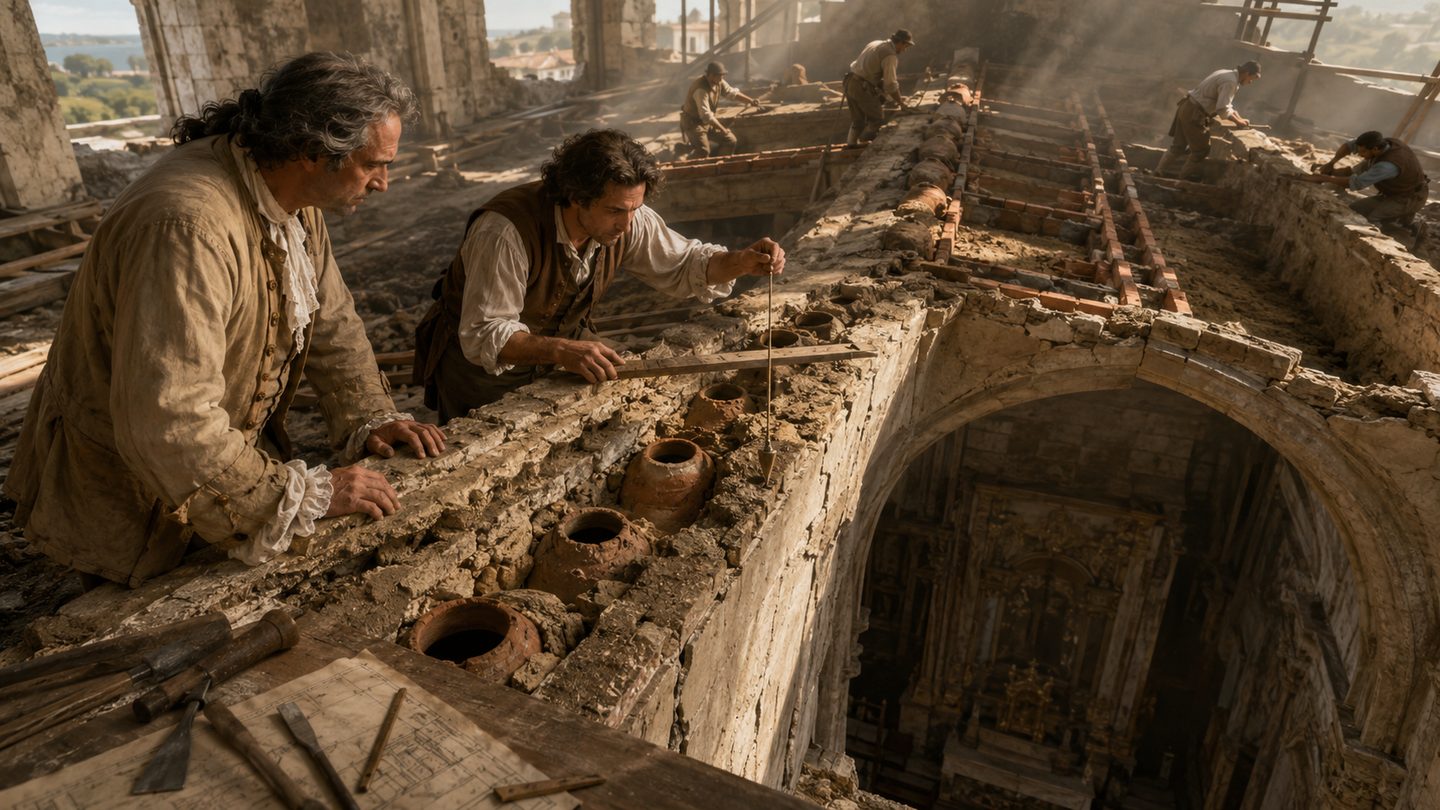
Acoustic vessels are not an invention of the novel. Archaeological research studies pots built into the walls and vaults of churches. At Montivilliers, in Normandy, the relationship between the vessels and an acoustic intention has been studied from the building and from the documents.
In the novel: Antão takes the interpretation further than the evidence allows. Studying the resonant frequencies of a pot is not the same as recovering a recording of the past, nor as proving the exact note of a psalm once sung there.
The Author’s Note names Vitruvius, Mersenne, Kircher, Sauveur, Ptolemy, Boethius and Hooke among the references of Antão’s technical world. The path runs through acoustic vessels, the propagation of sound, beats, monochords and the shape of arches.
They are clues for reading the workshop as a place where music, calculation and construction meet. The presence of these historical authors does not make the character’s particular experiments historical.
Source: the Author’s Note to Vox Humana, on Antão’s treatises.
08 · GEOGRAPHY
A true frame, invented houses
Braga, Tibães, the Marão and Olhão belong to the novel’s real geography. The Author’s Note distinguishes them from the three invented buildings: São Lázaro da Várzea, the Almada house on the Calçada do Sacramento, and the convent of Mercês in Olhão.
São Lázaro is not another name for Tibães. The real religious houses are not the sites of the fictional crimes. That distinction is part of the book’s deliberate construction.
Source: the Author’s Note, on topography and invented buildings.
09 · THE TIME OF WORDS
Why are there spans and metres on the same page?
The characters use the units of their own time: spans, cubits, arráteis, canadas and quartilhos. The narrator may use metres and grams. The Author’s Note explains the difference as the distance between those who live inside the story and whoever is telling it.
It also separates real institutions from fictional machinery: the Mesa da Consciência e Ordens existed; the royal-patronage commendam attached to São Lázaro is the invented device that lets the Visitor into that monastery.
Source: the Author’s Note, on measures and jurisdiction.
10 · THE PRICE OF A MASTERPIECE
Weingarten: the human voice that ruined the man who made it
Joseph Gabler signed the contract for the organ of Weingarten basilica on 6 July 1737 and saw it consecrated on 24 June 1750. Thirteen years, 63 stops, 6,890 pipes, four manuals. His vox humana was famous in his own lifetime — and a modern acoustic analysis shows why: it carries a formant between 1.8 and 4.4 kHz, the same high resonance that distinguishes a trained male voice from an ordinary one.
The boundary: legend says Gabler sold his soul to the devil for that stop. No document supports it — it is folklore, born of astonishment. What is documented is harsher, and closer to this book: the organ ruined him. An excellent builder and a poor businessman, Gabler never recovered from the work that made him famous.
The question still stands, and it is the novel’s: what does a masterpiece cost, and who pays.
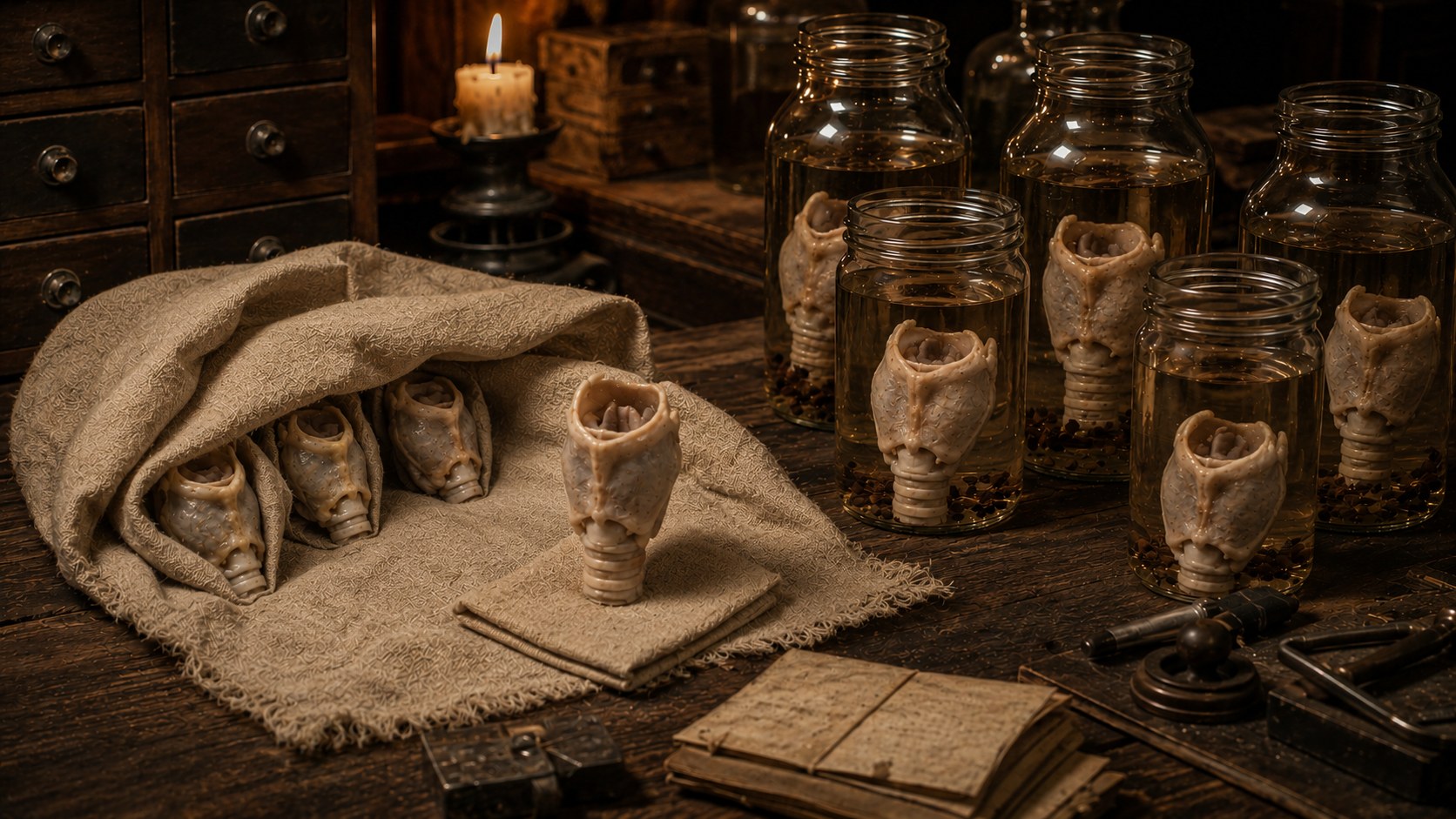
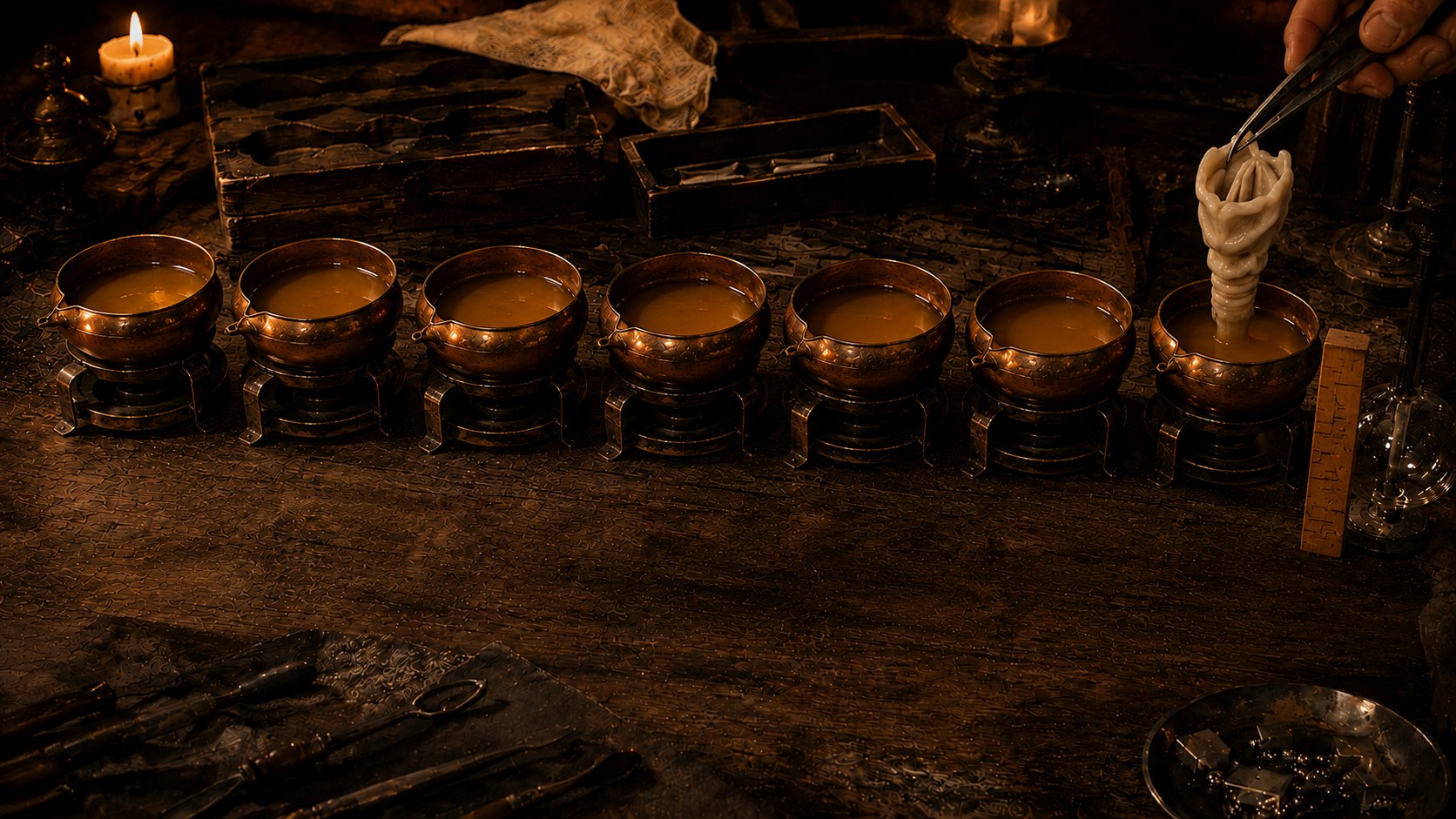
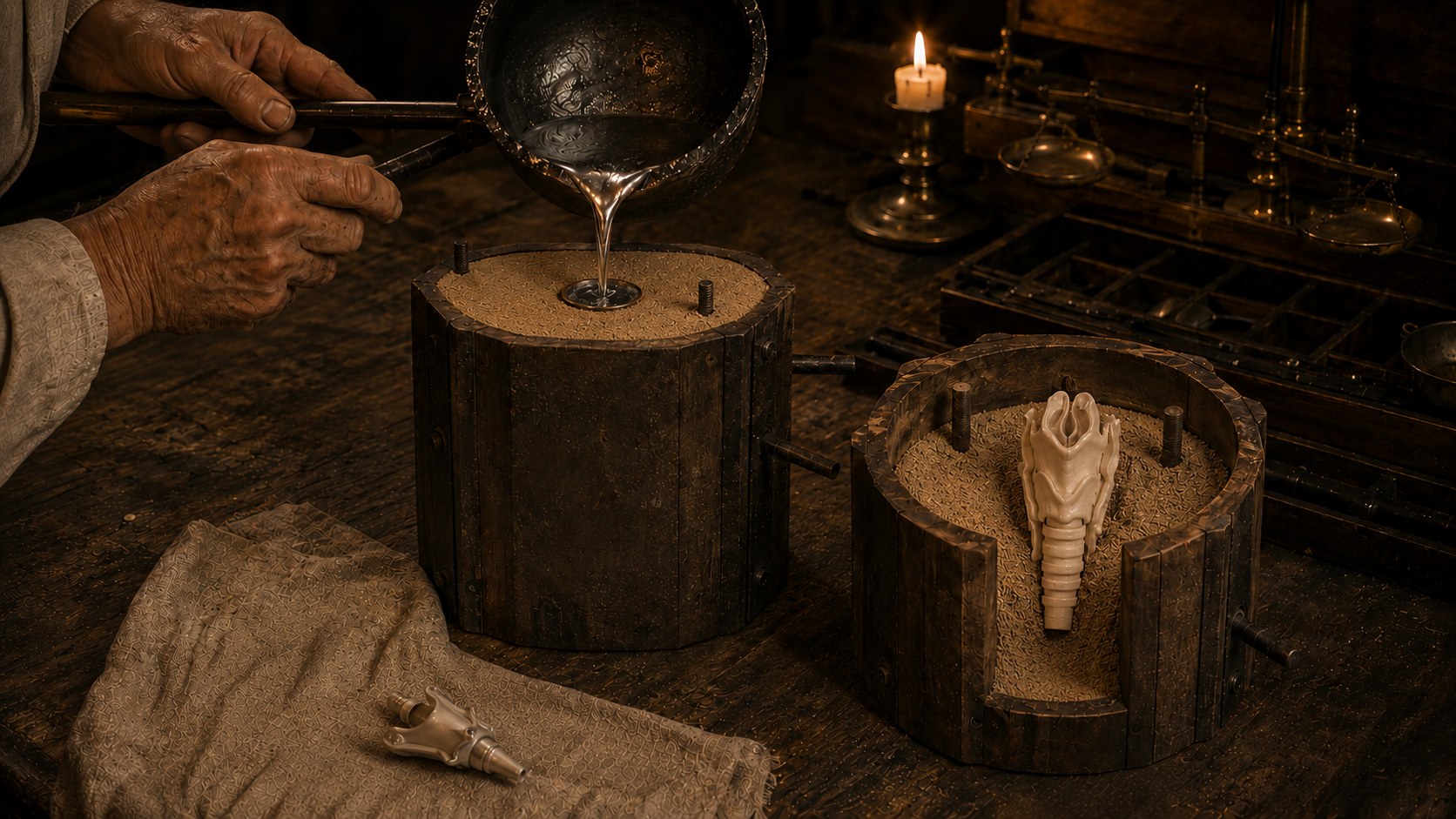
Inside the workshop: the three stages of the methodContains spoilers and anatomical illustrations. Open only if you want to know the novel’s technical secret.
Spirit, Wax and Mould: three images supplied by the author to illustrate the fictional method. They are depictions of the world of Vox Humana, not historical documents nor demonstrations of any real procedure.
Stage I · Spirit. Illustration supplied by the author. Open the image to enlarge.Stage II · Wax. Illustration supplied by the author. Open the image to enlarge.Stage III · Mould. Illustration supplied by the author. Open the image to enlarge.
An anachronism the book admits to
The Author’s Note relates the sealing alloy to the family of low-melting-point bismuth, lead and tin alloys. It identifies Antão’s recipe as a deliberate fictional anticipation of the documented formulation later known as Rose’s metal. That fusible alloys exist does not make the preservation of a human voice, as narrated, possible.
Links
These pages helped write the book and build this section. They are public, free, and kept by people who know the subject. They are here out of gratitude, and for anyone who wants to go further.
Encyclopedia of Organ StopsThe dictionary of organ stops, compiled by Edward L. Stauff. This is where the vox humana was checked.