
1762
The workshop
Braga. Tomás inherits the finest workshop in the Kingdom and an organ his father left unfinished, with instructions that cancel each other out.
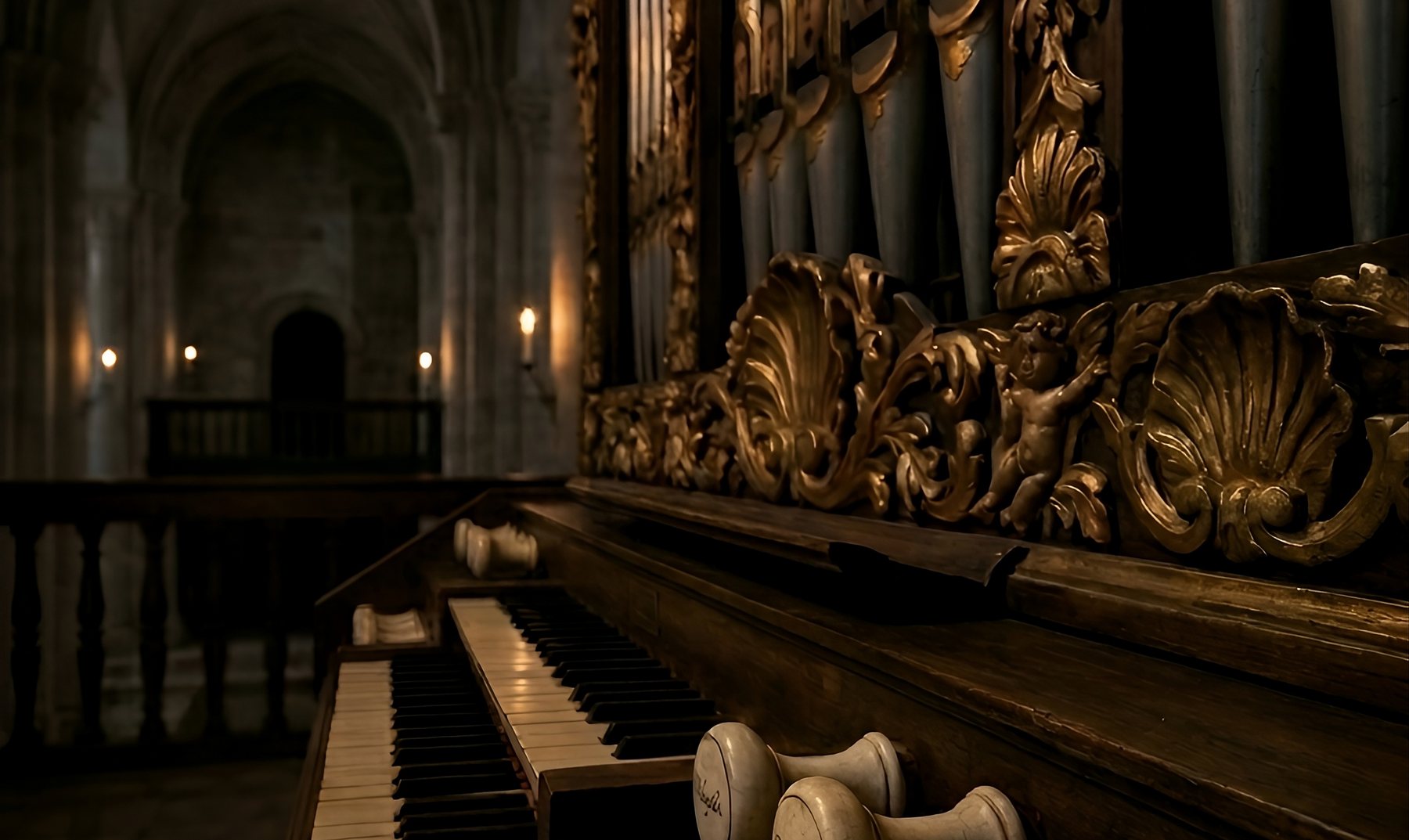
Braga, 1762. Tomás de Almada inherits the finest workshop in the Kingdom of Portugal and an unfinished organ — with a stop no one has ever heard: forty-nine pipes that sing like throats. His father spent the last hours of his life making it impossible to finish: he left instructions that cancel each other out, and a cedar box his son must never open.
In the Almada household there is a woman who does not speak. In twenty-five years of service she has written eight letters and never delivered one. Yet.
In 2025, Inês Salgueiro is commissioned to restore the instrument — sealed since the day of its inauguration. But something doesn't sit right. She weighs the pipes, and the numbers don't add up.
Inês holds in her hands the proof of forty-nine stolen voices. What do you do with a masterpiece when you discover it wasn't just paid for with lives — it was made of them?
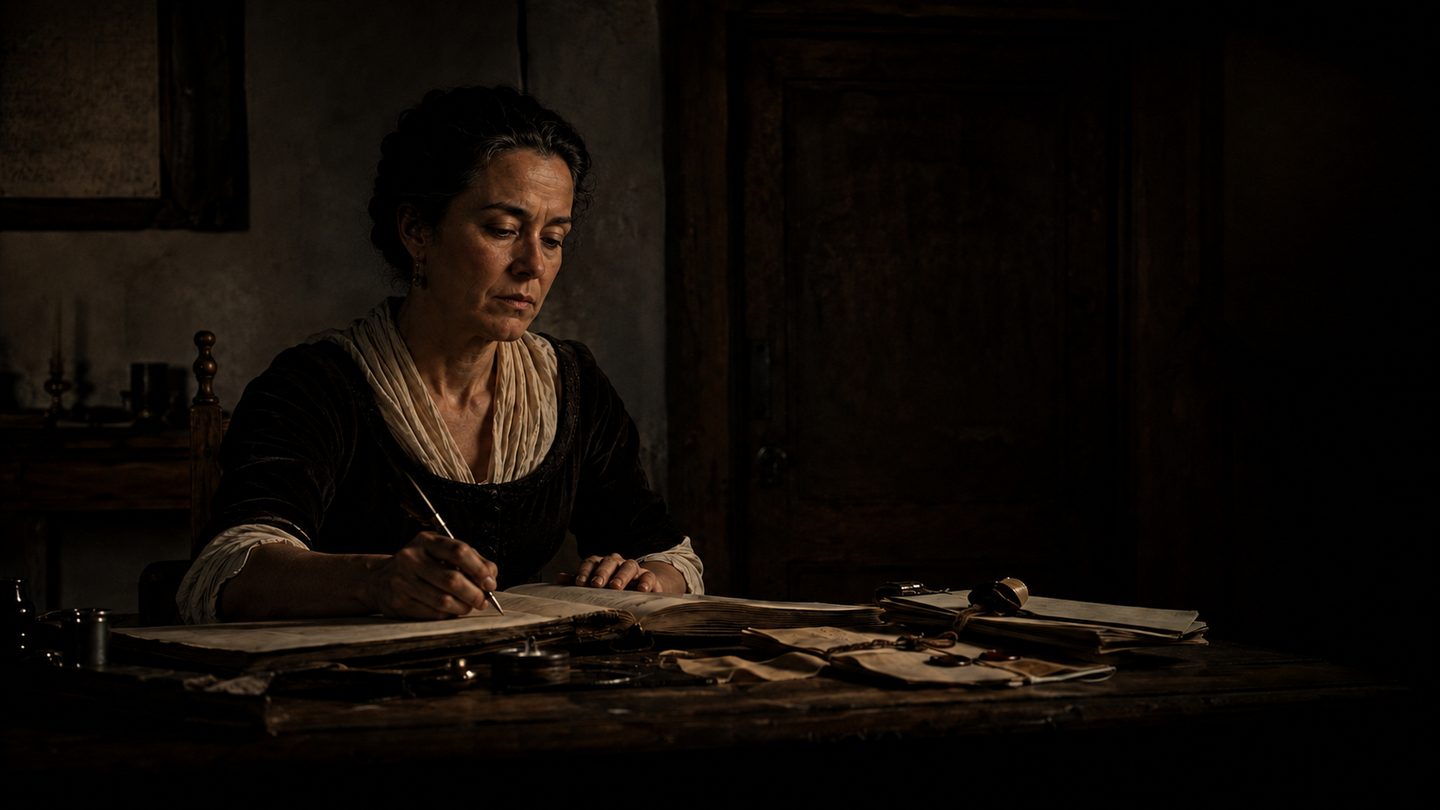
1762
Braga. Tomás inherits the finest workshop in the Kingdom and an organ his father left unfinished, with instructions that cancel each other out.
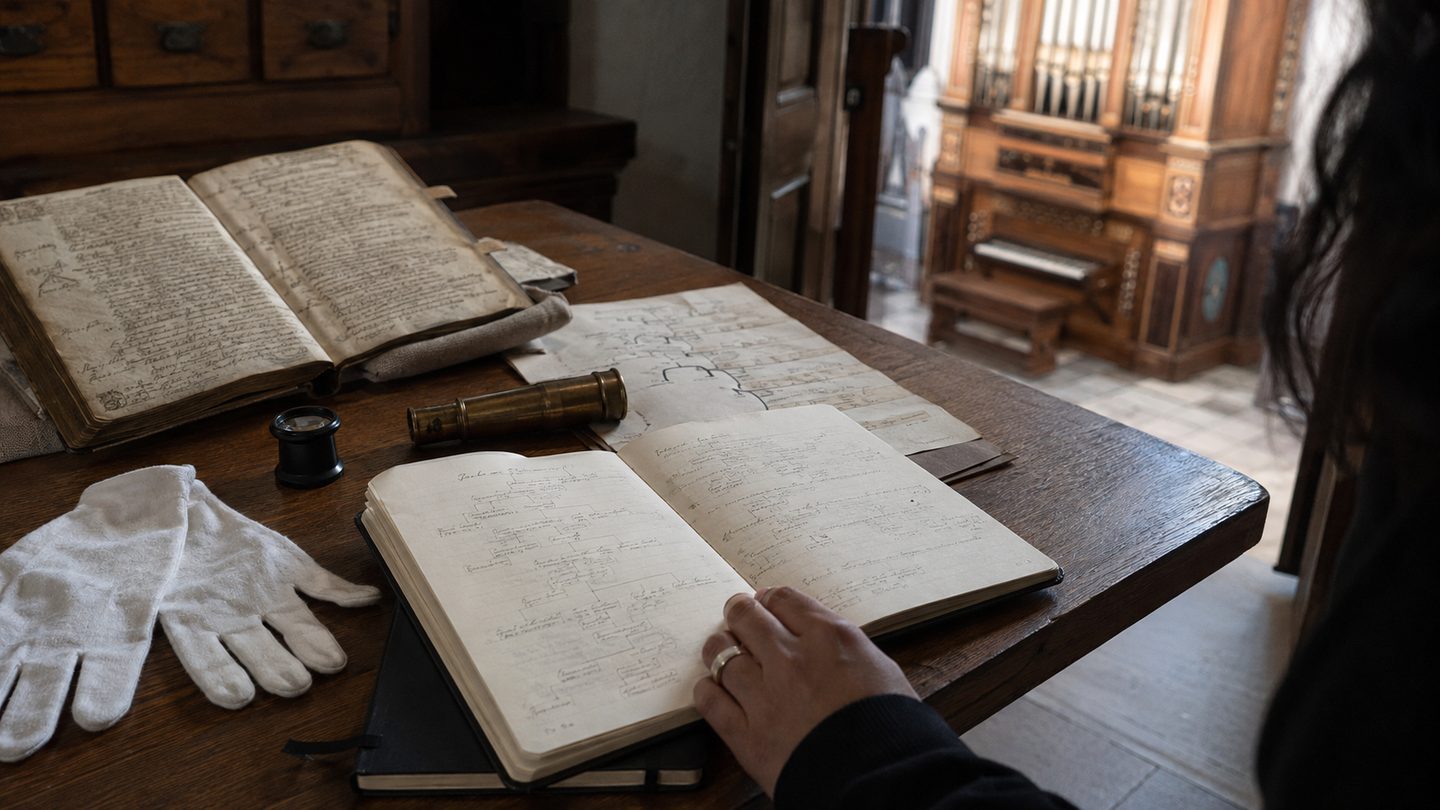
2025
Inês Salgueiro opens an instrument sealed since its inauguration. She weighs the pipes, and the numbers do not add up.
the central register
Forty-nine pipes, from the lowest to the highest — the stop no one has ever heard. In the workshop archive, each of them carries a date beside a price.
Move across the pipes, from the lowest voice to the highest. In an eight-foot stop each pipe answers to the key of its own name — and the lowest is eight feet of tin, two and a half metres of it.
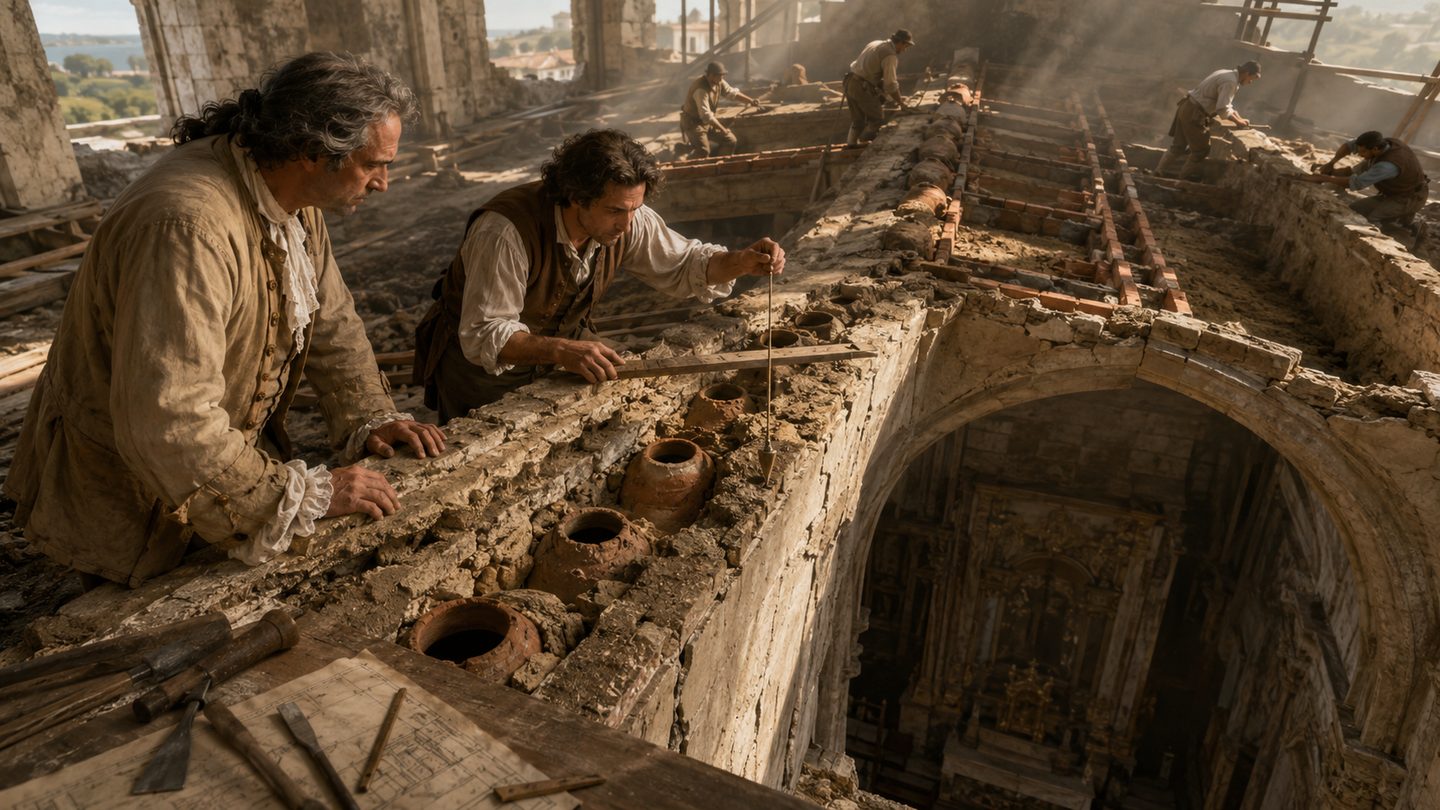
Dom Bedos’s treatise, the organs of Mafra, anatomy in wax, acoustic vessels buried in church walls: the real references behind the Author’s Note, with historical images and sources. The three illustrations of the method sit behind a spoiler warning. Page in Portuguese.
Gonçalo de Azevedo is a civil engineer whose path runs through construction, languages and the sciences. He travels, draws, paints and reads with the same disciplined curiosity. Vox Humana, his first novel, comes out of that crossing of technical rigour and fascination with what goes unsaid.
In 2013, through Meloteca, the author discovered master Pedro Guimarães and his Oficina e Escola de Organaria (organ-building workshop and school) in Esmoriz, where the fascination with pipe-organ building behind this novel was born. Vox Humana owes much to that encounter, and to those who made it possible: Meloteca and its founder, António José Ferreira.
Each link opens the Amazon marketplace for that language. Any bookshop can order the print edition by ISBN.
Bibliographic record for the Portuguese print edition, for cataloguing and acquisition. The English, Spanish, French and German editions carry their own ISBNs, listed below.
It's a gothic historical novel about the building of a pipe organ in 18th-century Braga, Portugal, and the 2025 discovery of a secret hidden inside the instrument for over 250 years. At its core, it's a story about inheritance, silence, and the real price of a masterpiece.
No — it's fiction, but grounded in genuine historical and organ-building research on 18th-century Iberian organ construction.
Historical fiction with a gothic tone and a mystery structure — two timelines answering each other: the Almada workshop in Braga across the second half of the 18th century, and the restoration of the organ in the present day.
Portuguese, English, Spanish, French and German, in ebook and paperback.
It's a standalone novel.
The Portuguese print edition carries ISBN 978-989-34-0206-1, issued by the Portuguese national ISBN agency. The English, Spanish, French and German editions each have their own ISBN — the full list is in For libraries and cataloguers. Any bookshop or library can order by those numbers.
Gonçalo de Azevedo is the pen name of a Portuguese civil engineer, researcher, painter and photographer with a PhD from the University of Aveiro. His thesis assessed the seismic behaviour of old buildings, and his work also supports the rehabilitation of heritage buildings. He studied in Barcelona, Weimar and Milan, and has been a researcher at the University of Aveiro and at FEUP. Vox Humana is his first published novel, born of a fascination with organ building that began in 2013, when he discovered, through Meloteca, master Pedro Guimarães and his workshop in Esmoriz. Author page on Amazon.
The five existing editions are self-published. No subsidiary rights have been granted: translation rights into further languages, audiobook, stage and screen rights are all available, in every territory.